
Loose-leash walking: preparation and your first exercises
Choose a quiet place, reward a loose lead and notice small improvements. A practical start without promises to fix everything in one walk.

Separate a walk from a short practice session
The whole walk does not have to be an exercise. Choose a short, familiar stretch where stopping is easy, and decide what to observe: perhaps a few steps without tension. Start somewhere quiet with few distractions.
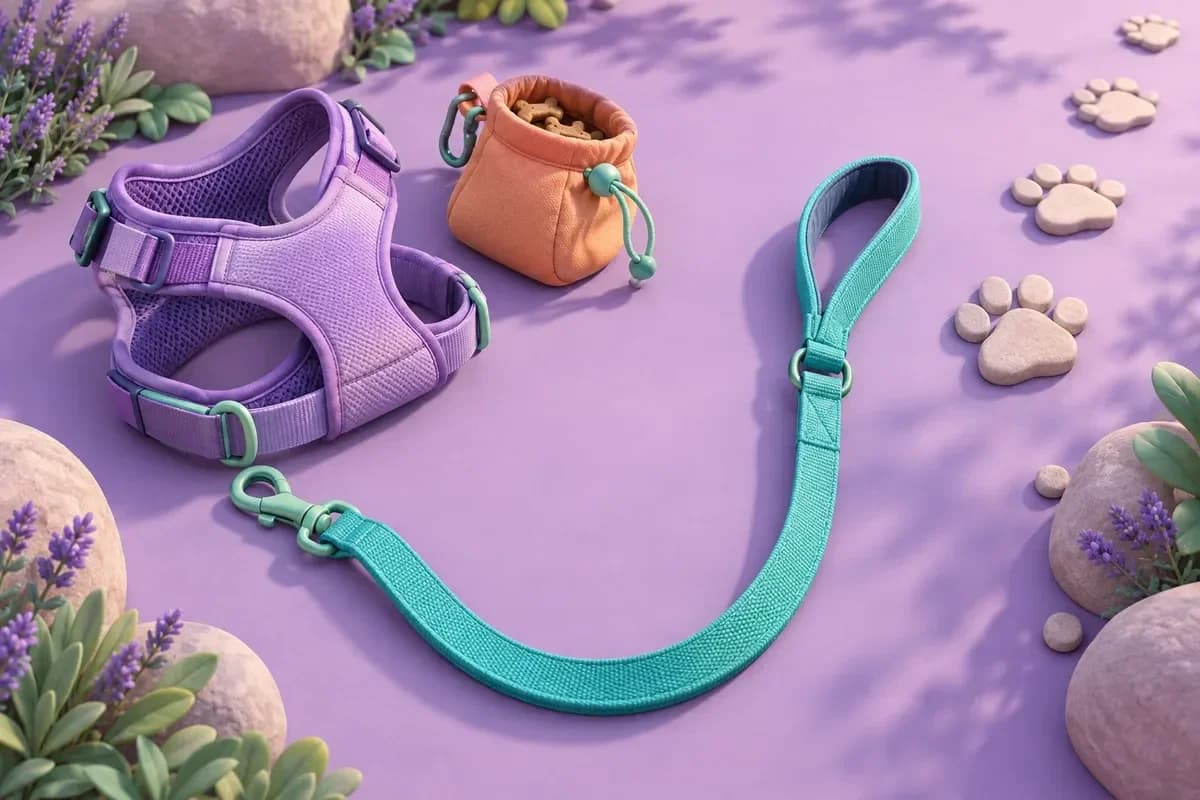
Check that the equipment fits comfortably and you can hold the lead safely. Discuss pain, mobility problems or sudden changes in behaviour with your vet first. A technical exercise will not resolve those causes.
The first steps
RSPCA guidance focuses on rewarding a position beside you with a loose lead, and not continuing forward when it is tight. Start simply: your dog is beside you, the lead hangs loose, and you mark and reward that. Then try a few steps at a calm pace.
If the lead tightens, stop and wait for it to become loose before continuing. Do not jerk your dog backwards. If tension is constant, simplify the setting: fewer distractions, a shorter stretch and a clearer starting point.
What counts as progress
Compare similar situations. Five calm steps at home and two beside a busy park reflect different conditions, not necessarily a setback. Record the place, distractions and what helped. Do not make distance the only measure.
Example: 'Walked beside me for a few steps on the quiet path. Bicycles made it harder; we moved towards the trees.' This helps the next family member choose a suitable place to start.
How to continue tomorrow
Repeat a short, familiar pattern, then return to an ordinary walk. In Waglio, record a training session and leave a note on the walk. Saved history supports observations, not competition with other dogs.
If you cannot find conditions that work, consult a professional who uses reward-based training. Show your notes: they describe the situation more precisely than 'always pulls'.
Before-going-out checklist
Start with an achievable task and leave your dog time simply to explore.
- Equipment fits and causes no discomfort.
- A quiet stretch has been chosen.
- Rewards are ready and included in the food allowance.
- The exercise is short and clear.
- Notes record the conditions, not only the result.
Continue with Waglio
App features for everyday care
Short training sessions at home
Sources and editorial checks
An editorial article. General guidance was checked against the primary sources below; everyday examples and checklists were prepared by the Waglio editorial team. This article does not replace individual professional advice.